

How to Choose the Right Outboard Motor for Your Boat Size
Buying a boat is exciting. But ask any experienced boater, and they’ll tell you the same thing: the boat is only as good as the engine behind it. Too little power, and you’ll crawl across the water. Too much, and you’ll waste fuel or even risk damaging your boat.
At Bluewake Outboards in Hamburg, we’ve helped hundreds of first-time buyers figure out this puzzle: how to choose the right outboard engine. With years of experience selling and servicing Yamaha, Suzuki, Mercury, Honda, and Tohatsu motors, we know what works — and what doesn’t — for every size of boat.
This guide is our no-nonsense outboard motor horsepower guide, complete with an outboard motor size chart and real-world stories from our workshop to help you choose confidently.
Why Matching Your Boat and Motor Matters
A boat and an engine are like a dance partner — they need to move in sync. When mismatched, problems happen:
- Underpowered boats struggle to plane, burn more fuel, and feel unsafe in strong currents.
- Overpowered boats may become unstable, exceed manufacturer limits, and cost you more in fuel and insurance.
- The right fit delivers smooth cruising, efficient fuel use, and long-term reliability.
I’ll never forget a customer in Bremen who put a 40 HP motor on a 20-foot fishing boat. On calm lakes, it worked fine. But in open water, he could barely make headway against the wind. After repowering with a 90 HP, his trips became effortless.
Outboard Motor Horsepower Guide
Here’s a quick breakdown we use daily at Bluewake Outboards when advising customers:
| Boat Length | Recommended HP Range | Example Use Case |
|---|---|---|
| 10–15 ft | 10–40 HP | Dinghies, small fishing boats |
| 16–20 ft | 40–115 HP | Day boats, light cruisers |
| 21–25 ft | 115–200 HP | Family cruisers, sport boats |
| 26–30 ft | 200–300 HP | Offshore fishing, larger cruisers |
| 30 ft + | 300–425 HP | Commercial, performance boats |
This outboard motor size chart isn’t just theory — it’s based on hundreds of installations we’ve handled over the years.
How to Choose the Right Outboard Engine (Step-by-Step)
1. Check Your Boat’s Rating Plate
Every boat has a manufacturer’s maximum horsepower rating. Never exceed this — not only for safety but also for insurance and legal compliance.
2. Consider Your Typical Load
Are you usually alone, or do you carry five passengers plus gear? Always size your motor for the heaviest load you expect.
Experience tip: A customer once downsized from a 150 HP to a 115 HP to “save fuel.” With two people, it was fine. With a family of six onboard, it struggled. He ended up burning more fuel.
3. Think About Your Waters
- Calm lakes: Lower horsepower is acceptable.
- Rivers & open seas: Extra power gives safety and control.
4. Shaft Length Matching
Outboards come in short (15”), long (20”), extra-long (25”), and ultra-long (30”). Matching shaft length to your boat’s transom is essential. Too short, and the prop cavitates. Too long, and you drag, wasting fuel.
5. Brand & Features
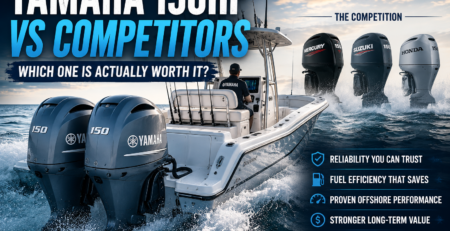
- Yamaha: Reliability and smooth performance.
- Suzuki: Fuel-efficient with lean burn systems.
- Mercury: Performance and advanced digital controls.
- Honda: Quiet, eco-friendly operation.
- Tohatsu: Affordable, lightweight portability.
Real-World Examples From Our Workshop
- Fishing Boats (16–18 ft): We often recommend 60–90 HP Yamaha or Suzuki. Balanced, efficient, and easy to maintain.
- Family Cruisers (20–24 ft): A 150 HP Mercury or Honda gives smooth cruising with enough reserve power.
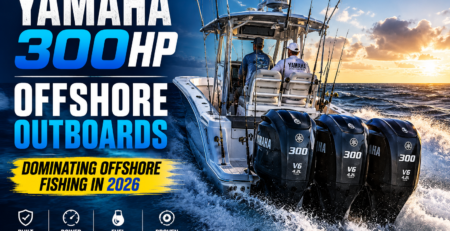
- Commercial Boats (30 ft +): Yamaha 300+ HP engines are popular with charter operators — built for heavy use.
- Dinghies & Tenders: Tohatsu 9.9 HP or Suzuki 15 HP — easy to lift, reliable, and affordable.
Outboard Motor Size Chart: Quick Reference
Here’s a simplified version you can bookmark:
| Boat Type | Recommended HP | Suggested Models |
|---|---|---|
| Dinghy/Tender | 2.5–20 HP | Tohatsu 9.9, Suzuki DF15 |
| Fishing Boat | 40–90 HP | Yamaha F70, Suzuki DF90 |
| Family Cruiser | 115–200 HP | Mercury 150, Honda BF150 |
| Offshore/Charter | 250–300 HP | Yamaha F300, Suzuki DF250 |
| Performance/Racing | 300–425 HP | Mercury 400 Verado |
FAQs: Choosing the Right Outboard
How do I read an outboard motor horsepower guide?
Use your boat’s length and weight as the starting point, then match HP from the recommended range.
What happens if my engine is underpowered?
You’ll burn more fuel, struggle to plane, and reduce your boat’s lifespan.
What’s the risk of overpowering?
Boats become unstable, insurance may be invalid, and manufacturers can void warranties.
How do I match shaft length to my boat?
Measure your transom height — 15” (short), 20” (long), 25” (extra-long). Always match within 1–2” for best results.
Which outboard brand is best for first-time buyers?
Yamaha and Suzuki are most popular for beginners — reliable, efficient, and widely supported.
Why Consult Bluewake Outboards in Hamburg?
Choosing an outboard isn’t just about specs on paper. It’s about matching your lifestyle, your boat, and your waters. At Bluewake Outboards:
- We provide one-on-one consultations to help you choose the right outboard engine.
- Our certified mechanics know the differences between brands because we repair and service them daily.
- We offer fast European shipping and global flat-rate shipping.
- Every engine comes with full manufacturer warranty and after-sales support.
👉 Book your consultation today. Let us help you find the perfect fit from our outboard motor horsepower guide so your boat performs exactly as it should.



Leave a Reply